Welcome: VAVE in one hour
Who this course is for
Leaders who sponsor, fund or approve decisions about products and costs. You don't need an engineering background.
By the end of this hour you'll be able to
- Explain VAVE in two sentences.
- Say why it saves more money than asking suppliers for a discount.
- Recognise a well-run VAVE study, and what it needs from you.
- Explain why design, purchasing, manufacturing, quality, finance and sales all need to take part.
- Choose a first project and know what to measure.
How it works
The course has seven short parts, each about eight minutes. You can read, or press Listen and follow along. Each part ends with two quick questions and the key points for leaders. There's a 12-question quiz at the end. You don't need an account to start; sign in if you want to save your progress or get your certificate.
The hour at a glance
Six short parts, then the quiz. Box widths follow the minutes.
Course map: part 1, why VAVE and why now, 8 minutes with a video; part 2, VAVE in plain words, 8 minutes with a video; part 3, how a study runs, 10 minutes with a video; part 4, what VAVE delivers, 8 minutes; part 5, why everyone and why leaders, 10 minutes; part 6, your first 90 days, 8 minutes. Then the 12-question quiz and the certificate.
The hour in one minute
- What it is: a structured way to remove cost that customers aren't paying for, while keeping everything they are.
- What it's worth: a first proper study usually finds 8–15% of a product's cost, and every pound saved is worth many pounds of new sales.
- What it asks of you: a sponsor, a mixed team with protected time, quick decisions and a monthly check on real savings.
- What AI changes: analysis that used to take weeks now takes minutes, so teams spend their time on decisions. The judgement stays with people.
One idea to hold on to
VAVE asks one question about everything you make: what does this need to do, and what is the simplest reliable way to do it? The rest of this hour is about asking that question well, and making sure your organisation acts on the answers.
Why VAVE, and why now
You will learn
- Why the usual ways of cutting cost often backfire
- Why most of a product's cost is decided long before purchasing gets involved
- Why saving £1 of cost is worth far more than £1 of extra sales
1.1 · The squeeze
Materials, energy, labour and compliance all cost more than they did a few years ago. Customers won't pay more for the same product, and competitors are working hard to undercut you. That leaves two choices: raise prices, which is hard, or lower costs.
The usual ways of lowering costs have side effects:
- cheaper parts can bring warranty claims
- cutting staff removes the people who know how things work
- pushing suppliers for a discount every year wears down the relationship and rarely lasts.
VAVE takes a different route. It removes cost that customers aren't paying for, and keeps everything they are.
1.2 · Most cost is decided early
By the time a product reaches production, 70–80% of its lifetime cost is already decided. The design has fixed the materials, the number of parts, how it's made and what it needs from suppliers. Purchasing can only work on what's left.
That's why a pound of VE effort at a design review is worth ten after launch.
Chart: the share of lifetime cost that is committed rises steeply during concept and design, reaching 70–80% by the end of design, while the money actually spent stays low until testing and production.
Source: widely cited in design-for-manufacture research (e.g. Boothroyd & Dewhurst). The exact share varies by industry.
What this means for leaders: if VAVE only starts when purchasing is asked for another 5% off, you're only ever working on the last 20–30% of the cost.
Read the transcript
When is most of a product's cost decided? A figure often quoted is that around 70% of lifetime cost is fixed by the end of concept design, through materials, processes, and part count.
Hardly any money has been spent by then. Spending comes later, in production, after the decisions are locked in.
So design reviews are the cheapest place to change cost. Changes after tooling cost more, and save less.
1.3 · A pound saved or a pound sold?
Every pound of cost you save goes straight to profit. A pound of extra sales only adds its margin.
For example, say your profit margin is 8%. A VAVE idea saves 50p on a part you make 200,000 times a year. That's £100,000 a year of extra profit. To earn the same £100,000 from new sales, you'd need to sell another £1.25 million.
£100,000 two ways
Both rows make the same £100,000 of profit. Bars are drawn to the same scale.
Bar chart drawn to scale. Saving 50p a part on 200,000 parts a year gives £100,000, all of it profit. To make the same £100,000 at an 8% profit margin, you'd need £1.25 million of extra sales, twelve and a half times as much, where 92% goes on the cost of making and selling.
To match one VAVE saving, sales would need to grow by 12½ times as much.
Profit-equivalent calculator
Enter your own saving per unit, yearly volume and profit margin. It shows the yearly saving and how much extra sales would earn the same profit.
1.4 · Why now
Four things have made VAVE more urgent, and easier than it used to be:
- Cost pressure isn't going away. The savings that are easy to negotiate have mostly been taken already.
- Products change faster. With shorter product lives, there's less time after launch to recover cost, so it has to be designed in.
- Sustainability rules. Using less material and fewer parts lowers both cost and CO₂.
- Better tools. Teardown data, should-cost software and AI make it much faster to see what a product should cost. Module 4 shows where AI helps most.
1.5 · What VAVE is not
- Not making things cheaper and worse. If a change hurts what customers value, it's rejected.
- Not a one-off cost drive. It works best as a regular habit with targets and follow-up.
- Not only purchasing's job. Most cost is decided in design, so design, manufacturing, quality and finance have to be involved.
Key points for leaders
- Most cost is decided at the design stage. Put VAVE where the decisions are made, not only where the invoices are paid.
- A cost saving is worth many times the same amount of new sales. Judge VAVE projects against that, not against a training budget.
- VAVE protects what customers pay for. That's what makes it different from ordinary cost cutting.
VAVE in plain words
You will learn
- The one formula behind VAVE
- What VA, VE and VAVE mean
- Why looking at what things do finds savings that line-by-line cost cutting misses
2.1 · Value = function ÷ cost
A product isn't good value or poor value because of its price. Value compares what something does with what it costs.
Take two kettles that heat water equally well. One costs £9.80 to make; a rival's costs £12.40. They do the same job, so the cheaper one is better value. A premium kettle costs £18 to make, but customers happily pay £35 for its look and feel, so it's good value too. Value is about the ratio, not the price tag.
Read the transcript
What makes something good value? A low price is only half the answer. Value compares what something does with what it costs. Function, divided by cost.
Take two kettles that do the same job. One costs £9.80 to make, the other £12.40. Same function, lower cost: better value. A premium kettle that costs £18 can still be good value, if customers will pay £35 for its look. Looking good is a function too.
VAVE starts by asking what each part is for, in two words. Heat water. Contain water. Convey esteem. Then the team compares what each function costs with what it is worth: the lowest cost of doing that job reliably.
A £10 watch tells the time reliably. So telling the time is worth about £10. A £5,000 watch tells the same time. The extra pays for esteem. A charger packed in a rigid gift box costs more to make, but most people throw the box away. That's cost the buyer doesn't value.
Back to Kettle B. The status light costs 60p, but could be done for 15p. The premium finish costs £2.10, but is worth about 70p on a basic kettle. Across all six functions, the same job could cost £8.60. £3.80 less.
Asking what it must do also opens up new ideas. A car doesn't need to carry a spare wheel. It needs to get you moving after a puncture. That's why many cars now use a repair kit.
First ask what it must do. Then ask how to make it cheaper.
2.2 · Five ways to improve value
- Same function, lower cost: the classic cost reduction, and where most VAVE work happens
- More function, same cost: a better product that helps you compete
- More function, lower cost: the ideal result, and more common than you'd think
- Function grows faster than cost: a better product that's worth the higher price
- Remove functions customers don't value: cut cost sharply by dropping features, backed by data
Notice what isn't on the list: cutting something customers do value just to save money. That's how cost cutting damages brands, and it's what VAVE is designed to prevent.
Five ways to improve value, and one that isn't
Each move changes function, cost or both. The sixth looks like a saving but destroys value.
Five ways to improve value. 1: same function, lower cost. 2: more function, same cost. 3: more function, lower cost. 4: function grows faster than cost. 5: remove functions customers don't value, cutting cost sharply. Not VAVE: cutting functions customers value just to save money.
Pick the value move
Five short scenarios. For each one, choose which of the five moves it is, or whether it isn't VAVE at all.
2.3 · VA, VE and VAVE
- Value analysis (VA) works on products already in production. You take the product apart, question every part and bring in improvements.
- Value engineering (VE) works during design, before the cost is fixed. Because most cost is decided there, this is where the biggest savings are.
- VAVE means doing both. Behind it sits value management: the targets, regular reviews and training that make it last instead of fading after one project.
2.4 · Think in functions, not parts
This is the idea that makes VAVE different. Instead of asking "how do we make this part cheaper?", the team asks "what job does this part do, and what's the cheapest reliable way to do that job?"
Every function is written as two words: a verb and a noun. A kettle's main job is heat water. It also has to contain water, control temperature, prevent scalding and show its status.
Then the team works out what each function costs, and what it should cost. The mismatches show up straight away. In the £12.40 kettle:
- "Show status" (the little light) costs 60p, but could be done reliably for 15p.
- "Convey esteem" (looking premium) costs £2.10 and is worth about 70p to customers of a basic kettle.
- Altogether, the functions could be delivered for £8.60, which is £3.80 less.
A cost-cutting exercise would have squeezed every part a little. Function thinking goes straight to where the money is being wasted.
Chart of the £12.40 kettle's six functions, cost against worth: heat water £4.20 against £4.20; contain water £2.80 against £1.90; convey esteem (looking premium) £2.10 against 70p; control temperature £1.90 against 85p; prevent scalding 80p against 80p; show status 60p against 15p. In total £12.40 against £8.60.
2.5 · How VAVE differs from what you already do
VAVE doesn't replace the cost programmes you already run. It asks a different question.
- Supplier negotiation: Can we pay less for this part? The design stays the same. VAVE asks whether the part is needed at all, and what it should cost.
- Lean: How do we remove waste in how things are made and moved? VAVE removes cost designed into the product itself.
- Six Sigma: How do we reduce defects and variation? VAVE asks whether the feature causing the problem is needed.
- Design-to-cost: What must this new product cost? VAVE is the method teams use to hit that target, on new and existing products.
They work best together: VAVE decides what the product should be, lean and Six Sigma make it well, and negotiation gets a fair price for it.
Key points for leaders
- Ask "what does it need to do?" before "how do we make it cheaper?"
- The best results come from design and purchasing working together. VE catches cost at the design stage, VA in production.
- Value is protected, not traded away. Any idea that hurts what customers pay for is rejected.
How a VAVE study runs
You will learn
- What happens before, during and after a VAVE workshop
- Who needs to be in the room
- How savings are tracked until they're real
Read the transcript
A VAVE study has three parts: before the workshop, the workshop itself, and the months after it.
Preparation takes 2–4 weeks. You need a sponsor who can make decisions, a written scope with a savings target, usually 10–20%, a mixed team of 6–10, including key suppliers, and a costed parts list, checked by finance.
The workshop lasts 3–5 days, and follows six steps. Gather the facts. Work out what each function costs, and what it is worth. Generate hundreds of ideas, with no criticism. Filter them down to the strongest few. Develop each one into a business case. Then present them to the sponsor.
After the workshop, ideas move through four stages: idea; validated by engineering and finance; approved by the sponsor; and in production. At approval, every idea gets a yes, a no, or more data by a date. And each yes gets an owner.
The funnel is reviewed every month, and savings count only once the change is in production. Many approved ideas never reach production. Making sure they do is a leadership job.
3.1 · Before the workshop: 2–4 weeks
Most failed studies fail before they start. Preparation needs three things:
- A sponsor: someone senior enough to provide people and money, and to act on the decisions. This is usually you.
- A written scope: which product, its starting cost, the target (usually 10–20% of the cost being studied) and what's off limits.
- An information pack: a costed parts list checked by finance, quality and warranty history, what customers actually need, and ideally a teardown of a competitor's product and a should-cost estimate.
Without a scope, a study drifts. Without a sponsor, it produces slides and nothing else.
3.2 · Who's in the room
Six to ten people from different departments: design, manufacturing, purchasing, quality, finance and service, plus key suppliers who know their materials and parts. A trained facilitator runs the process but doesn't supply the answers.
A team from one department comes up with the same kind of ideas. The best ideas come when people from different departments challenge each other.
3.3 · The workshop week: six steps
- 1 · Information Day 1: Go through the costs, walk the production line, look at the product.
- 2 · Function analysis Days 1–2: Map what each part does and what each function costs, then find the mismatches.
- 3 · Creative Day 3: A full day of ideas for the costly functions. No criticism allowed.
- 4 · Evaluation Day 4: Sort, screen and score the ideas. Each surviving idea gets a named owner.
- 5 · Development Day 5: Turn the best ideas into business cases, with risks noted.
- 6 · Presentation Day 5: A decision meeting with the sponsor: yes, no or "more data by a date" for every idea.
Smaller studies can run in three days. The one thing you can't shorten is keeping the steps apart. If you come up with ideas and judge them in the same session, both suffer.
The job plan, step by step
Click through the six steps. Each shows what happens, who leads it, what it produces, and the question leaders should ask at that point.
3.4 · After the workshop: where savings are won or lost
Approved ideas go into a savings funnel:
- L1 Idea
- L2 Validated: finance has checked the savings
- L3 Approved
- L4 Implemented: the change is in production
The funnel is reviewed every month. Every idea has an owner, a stage and a date, or it's dropped. Savings only count at L4, measured against the starting cost that was fixed before the study, so price rises and changes in product mix can't blur the result.
This is the step organisations most often neglect: 40–60% of approved ideas never reach production. Simple changes can go live within weeks. Changes that need new tooling or testing take months, and they need someone senior watching them.
Where ideas drop out
One study, four months in. Bars show the number of ideas at each stage, to scale. Example from Module 8 of the VE Academy.
Savings funnel four months into a study: 320 ideas generated, 118 screened in, 51 validated by finance at L2 worth £2.4 million a year, 31 approved at L3 worth £1.6 million a year, and 9 in production at L4, with £410,000 a year of checked savings.
Only L4 counts. The monthly review is what moves ideas from approved to in production.
Source for 40–60%: practitioner experience; not a published statistic.
3.5 · What about risk?
The first worry most leaders have is that cutting cost will hurt quality or safety. In a well-run study it can't, because every change goes through the same checks as any other design change:
- Tested before approval: prototypes, simulation or trials prove the change meets every requirement.
- Approved by the right people: quality and engineering sign off, and so does the customer where contracts require it. In the car industry, for example, that's the Production Part Approval Process (PPAP).
- Brought in under change control: with a date, an owner and a way back if something goes wrong.
An idea that can't pass these checks isn't a saving. It's a risk, and it's rejected.
What it asks of you
- Before: an hour to agree the scope and target, and to name the team.
- During: open the workshop, then chair the decision meeting at the end (about two hours).
- After: 30 minutes a month reviewing the savings funnel, and quick decisions when something is blocked.
Key points for leaders
- Before a study starts, make sure it has a sponsor, a scope and a target. If it doesn't, don't start it.
- Give the study a mixed team, and protect their time for the whole week.
- Judge VAVE on savings actually in production (L4), not on the list of ideas in the final presentation.
What VAVE delivers
You will learn
- The six kinds of benefit VAVE brings, not only lower cost
- What savings to expect, with real examples
- How to judge a VAVE business case in two minutes
4.1 · More than cost
- Lower cost. A first proper round on a product nobody has studied usually finds 8–15% of product cost. Established programmes keep finding 3–5% a year, and studies often return more than 10 times what they cost to run.
- Better quality. Fewer parts means fewer things to go wrong. Every part removed is one that can't fail, be fitted wrongly or run out.
- Simpler, faster manufacturing. Fewer steps and less equipment, so there's less to maintain and quicker changeovers.
- Better supplier relationships. Suppliers work with you on the design, instead of arguing with you about price every year.
- Less material and CO₂. Lighter designs with fewer parts lower cost and emissions at the same time.
- Stronger teams. People learn to think in functions and work across departments. The skill stays after the project ends.
Sources: 8–15% and 3–5% are typical practitioner ranges; published results vary widely, from about 5% to over 40%, depending on the product. "More than 10 times": US state highway VE programmes report returns of 41:1 to over 75:1 (Virginia and Minnesota DOTs).
What each pound spent on VE has returned
Pounds saved for every pound spent on the VE work. Bars are drawn to the same scale.
Bar chart of return on VE effort: a well-run study returns more than 10 to 1; Virginia's highway VE programme reports 41 to 1; Minnesota's reports over 75 to 1.
Highway programmes study very large projects, so their returns run high. 10:1 is the safer figure to plan with.
4.2 · Proof at scale
Case study — documented
US highway programme. US law requires a VE study on large highway projects. From 2002 to 2011, the studies delivered an average of $1.7 billion a year in savings that were actually put into practice. In 2011 alone, 378 studies led to 1,224 changes, worth about $1.0 billion. People believe the numbers because every recommendation is tracked and published. Source: FHWA Value Engineering annual summary reports.
Case study — documented
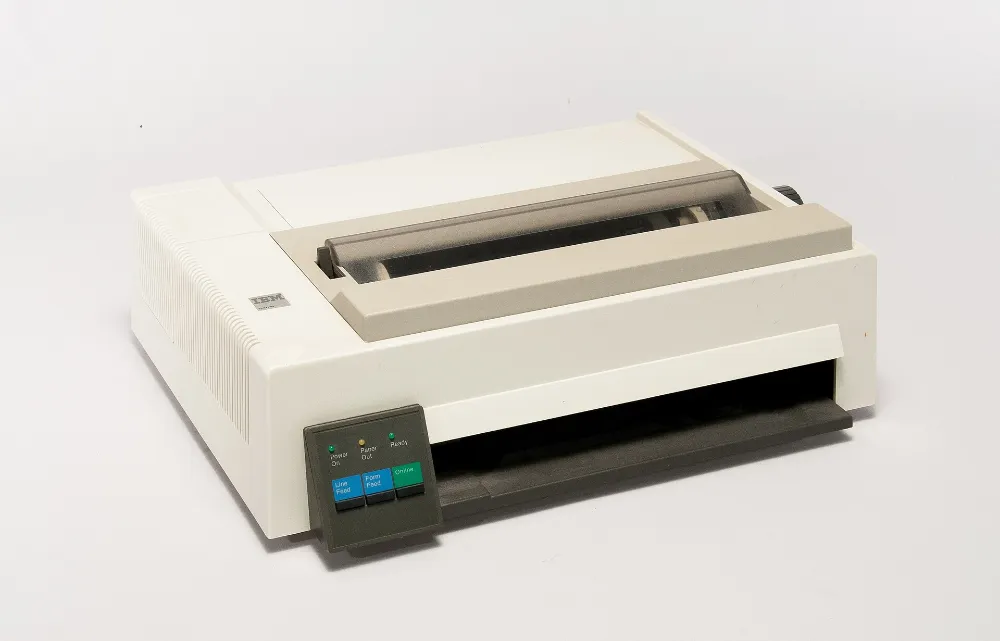
IBM Proprinter. In the 1980s, IBM designed its printer for easy assembly. Parts went from 152 to 32 and assembly time fell by 91%, with every screw replaced by snap-fits. Source: Boothroyd Dewhurst Inc., DFMA case history.
Case study — documented
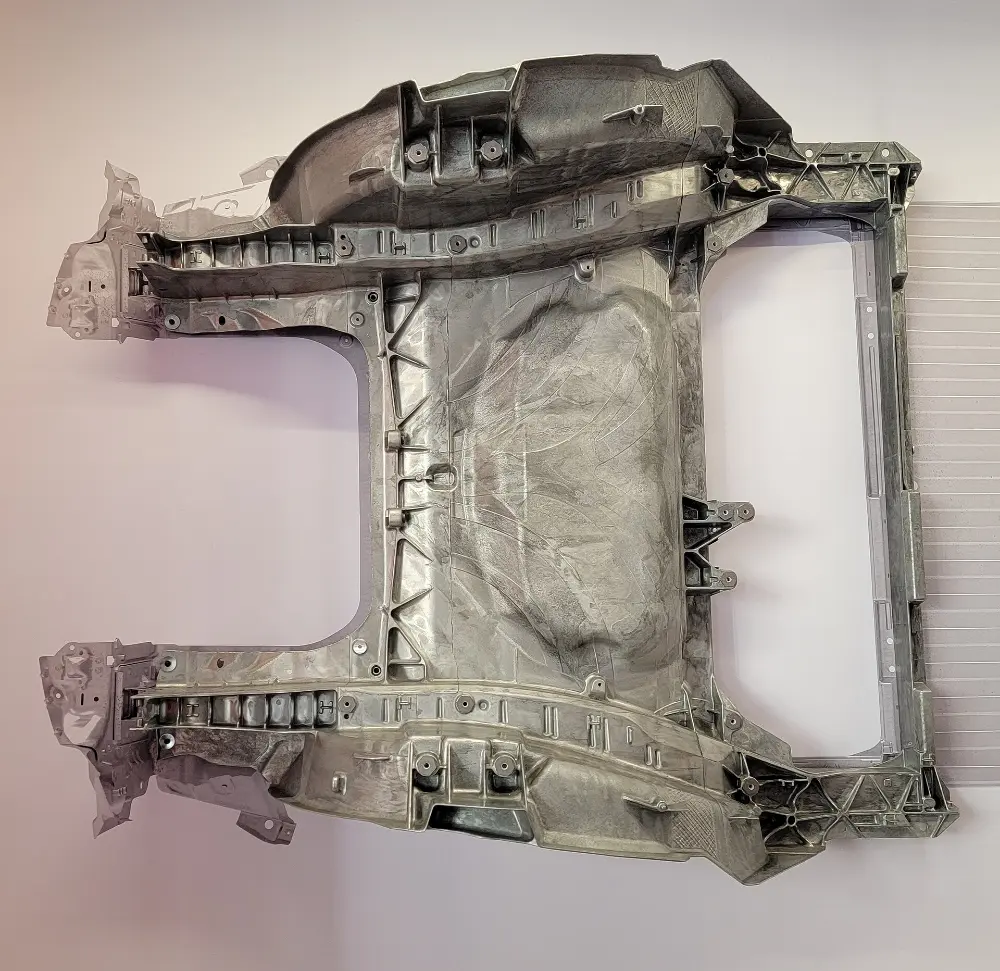
Tesla Model Y. About 70 pressed and welded parts were replaced with one or two large castings. Reports put the saving at about 40% of that assembly's manufacturing cost, with hundreds of welding robots no longer needed and a rear body about 30% lighter. There were new risks (repairs and casting quality) that had to be tested before the savings were real. Sources: Tesla statements; industry reporting.
4.3 · Reading a VAVE business case
A good proposal answers five questions:
- What exactly changes?
- What does it save? (checked by finance)
- What does it cost to bring in? (tooling, testing, engineering time)
- What could go wrong, and how will it be handled?
- When does it happen?
Worked example
Replace a machined bracket with a cheaper stamped one (made by fine blanking). The saving is 30p per unit × 300,000 units = £90,000 a year. The one-time cost is £38,000 for tooling plus £7,000 for testing, £45,000 in total. Payback is 6 months.
One detail leaders often miss: savings start on the day the change goes into production, not the day it's approved. If a decision in this example is delayed by six months, that delay costs £45,000.
Business case in 60 seconds
Enter the saving per unit, yearly volume, one-time cost and months until the change goes live. It shows the yearly saving, the payback, what the wait until production costs, and the verdict a board would likely give.
4.4 · VAVE in the AI era
AI doesn't change what VAVE is. It changes how fast teams can do it. Four uses matter most today:
- Should-cost in minutes. Costing software reads a product's 3D model, works out how it would be made, and estimates its cost in different countries. It takes minutes instead of the weeks it takes to get supplier quotes. One leading tool covers more than 90 regions of the world.
- Finding hidden duplication. AI can scan thousands of parts and purchase records to find near-identical parts, and the same part bought at different prices.
- More ideas, faster. AI language tools suggest ideas for each function and summarise warranty and customer comments, so the workshop starts from better information.
- Better designs from the start. Generative design software tries thousands of shapes to find the lightest one that is still strong enough.
What AI doesn't change: people still decide what customers value, check every number and test every change. AI gives you a first draft, not the answer.
Two rules for leaders: keep confidential cost and supplier data out of public AI tools, and never approve a saving based only on an AI estimate.
Case study — documented
GM and Autodesk. Using generative design, GM engineers redesigned a seat bracket: eight parts became one 3D-printed part that was 40% lighter and 20% stronger. It was a proof of concept rather than a production part, but it shows AI delivering two classic VAVE results at once: fewer parts and less material. Source: GM and Autodesk, 2018; reported by Green Car Congress and CompositesWorld.
Source for "more than 90 regions": aPriori, product documentation.
Key points for leaders
- Expect 8–15% from a first proper study, and 3–5% a year once VAVE is how you work.
- Count the other benefits too: quality, speed, supplier relationships, CO₂ and skills.
- Ask the five questions of every proposal, and remember that delay has a price.
- AI makes VAVE faster, not automatic: people still decide, check and test.
Why everyone, and why leaders
You will learn
- What each department brings to VAVE, and why the whole organisation needs the training
- The five things only leaders can do
- Why programmes stall, and how leaders prevent it
5.1 · VAVE is a team effort
Most cost is decided in design, but no single department has all the answers:
- Design engineering: Why each feature is there, and what can safely change.
- Manufacturing: What's hard to make, slow to assemble or wasteful.
- Purchasing: Supplier costs, alternatives, and what suppliers could offer if asked.
- Quality and service: What fails in use and what customers complain about.
- Finance: Checked numbers, so the savings are believed.
- Sales and marketing: What customers actually value and will pay for.
- Key suppliers: Deep knowledge of their own materials and processes.
Why train everyone, not just a few experts? When everyone thinks in functions, ideas come up in everyday design reviews and supplier meetings, not only in workshops. A shared language also cuts arguments: "what job does this part do?" is a question everyone can answer. Samsung trained more than 1,000 engineers in TRIZ in 2004 alone and made it an expected skill for promotion, because a method only pays off when it becomes how people work.
Sources: The TRIZ Journal; Altshuller Institute case reports on Samsung's TRIZ programme.
5.2 · Why leaders need it most
Programmes rarely fail because the ideas are weak. They fail because nobody follows through. Following through needs people, time, decisions and money, and only leaders can provide them. That's why this course exists.
Everyone around one question
Each department sees part of the answer. Leaders provide what lets them work on it together.
Diagram: in the centre, the question "what does it need to do, and what should that cost?" Around it, what each department brings. Design engineering: why each feature is there. Manufacturing: what's hard to make or assemble. Purchasing: supplier costs and alternatives. Quality and service: what fails and what customers complain about. Finance: checked numbers, so savings are believed. Sales and marketing: what customers value and will pay for. Key suppliers: their own materials and processes. Leaders: people, time, decisions and money.
5.3 · Five things only leaders can do
- 1 · Sponsor it visibly. Put your name on the study, agree the scope and attend the decision meeting.
- 2 · Set targets based on evidence. Work back from the market price and the margin you need. Treat cost as a design requirement, as important as weight or performance.
- 3 · Protect the team's time. Free people up for the full workshop, and fund the engineering time needed to make the changes afterwards.
- 4 · Decide quickly. Every idea gets a yes, a no, or "more data by a date", recorded at the meeting. Remember that each month of delay costs savings.
- 5 · Track real savings. Review the savings funnel every month. Only count savings that are in production and checked by finance. Reward those, and give credit to the people who came up with the ideas as well as those who carried them out.
Who should own the programme? Someone neutral. A programme run from engineering tends to ignore purchasing, and one run from purchasing ignores design. A finance or operations director as sponsor keeps both sides balanced.
5.4 · Why programmes stall, and what leaders do about it
- No sponsor who can make decisions: Name one before the study starts.
- A team from one department: Insist on a mixed team, including suppliers.
- Savings targets without the people to deliver them: Fund the engineering time.
- A great presentation, but no decisions: Require a signed decision log.
- Savings claimed at approval, not in production: Count savings only at L4.
- Measuring activity (studies run) instead of results: Measure checked savings.
- Stopping after the first round: Keep going, because savings build up year after year.
Leadership readiness check
Eight questions about your organisation, each answered yes, partly or no. You get a score and your three most important next steps.
Key points for leaders
- VAVE needs every department. Train widely, so function thinking becomes everyday practice.
- Most programmes fail on follow-through, and follow-through is a leadership job.
- Sponsor, set targets, protect time, decide quickly and track real savings.
Your first 90 days
You will learn
- How to choose the right first product
- A simple 30/60/90-day plan
- The few numbers that show VAVE is working
6.1 · Choose the right first product
Whether a programme succeeds depends a lot on how the first study goes, so choose carefully. Score each candidate on five things:
- Spend: yearly volume × unit cost is big enough to matter.
- Design control: you're actually allowed to change it.
- Life left: at least two more years of production to collect the savings.
- Pain: margin pressure or warranty problems, so people want it fixed.
- Data: a costed parts list exists, or can be built in two weeks.
The ideal first product is a fairly simple, high-volume one that your own engineers designed. The worst is your flagship product, with tooling that can't change and a chief engineer who'll defend every detail.
Pilot picker
Enter up to three candidate products and score each one from 1 to 5 on the five criteria. It ranks them and warns you about deal-breakers, such as less than two years of life left or no freedom to change the design.
6.2 · Your 90-day plan
- Days 1–30: set up: Name a sponsor and a facilitator. Choose the pilot product. Fix a dated starting cost with finance. Write the scope and a target based on evidence. Buy competitor samples. The core team takes the full VE Academy; everyone else involved takes this course.
- Days 31–60: run the study: Run the 3–5 day workshop. Hold the decision meeting and sign the decision log. Give every approved idea an owner and a date. Set up the savings funnel.
- Days 61–90: deliver and learn: Start the monthly funnel review. Get the quick wins into production. Report the first checked savings. Tell the story widely. Choose the next two products, and update design guidelines with what you learned.
90 days on one line
Two milestones per month, and one goal at the end: checked savings in production.
Timeline. Days 1 to 30, set up: a sponsor and pilot product named, and a dated starting cost fixed with finance. Days 31 to 60, run the study: the workshop held, and the decision log signed. Days 61 to 90, deliver and learn: quick wins in production, and the next two products chosen. Day 90: first checked savings reported.
6.3 · The numbers to watch
Start with four:
- Checked savings in production (L4) against the target
- Ideas implemented: the share of approved ideas that reach production. Remember that 40–60% usually don't.
- Time to savings: months from approval to production
- Average payback
As the programme grows, add two more:
- Coverage: the share of product cost being actively studied (aim for at least 60%)
- Cost visibility: the share of the parts list with a should-cost estimate (aim for at least 80%)
6.4 · Your free toolkit
Everything you need to start is free on this site:
- the VE workshop agenda
- FAST worksheet
- function–cost matrix
- idea capture sheet
- savings funnel tracker
- teardown parts list
- one-page cheat sheet
For your teams, the full 13-module VE Academy teaches every step in depth.
Key points for leaders
- Choose a first product you can actually change and that people want fixed. The first win sets the tone.
- Aim to have checked savings in production within 90 days, then choose the next products.
- Measure results, not activity: checked savings, how many ideas are implemented, and how fast.
Final quiz